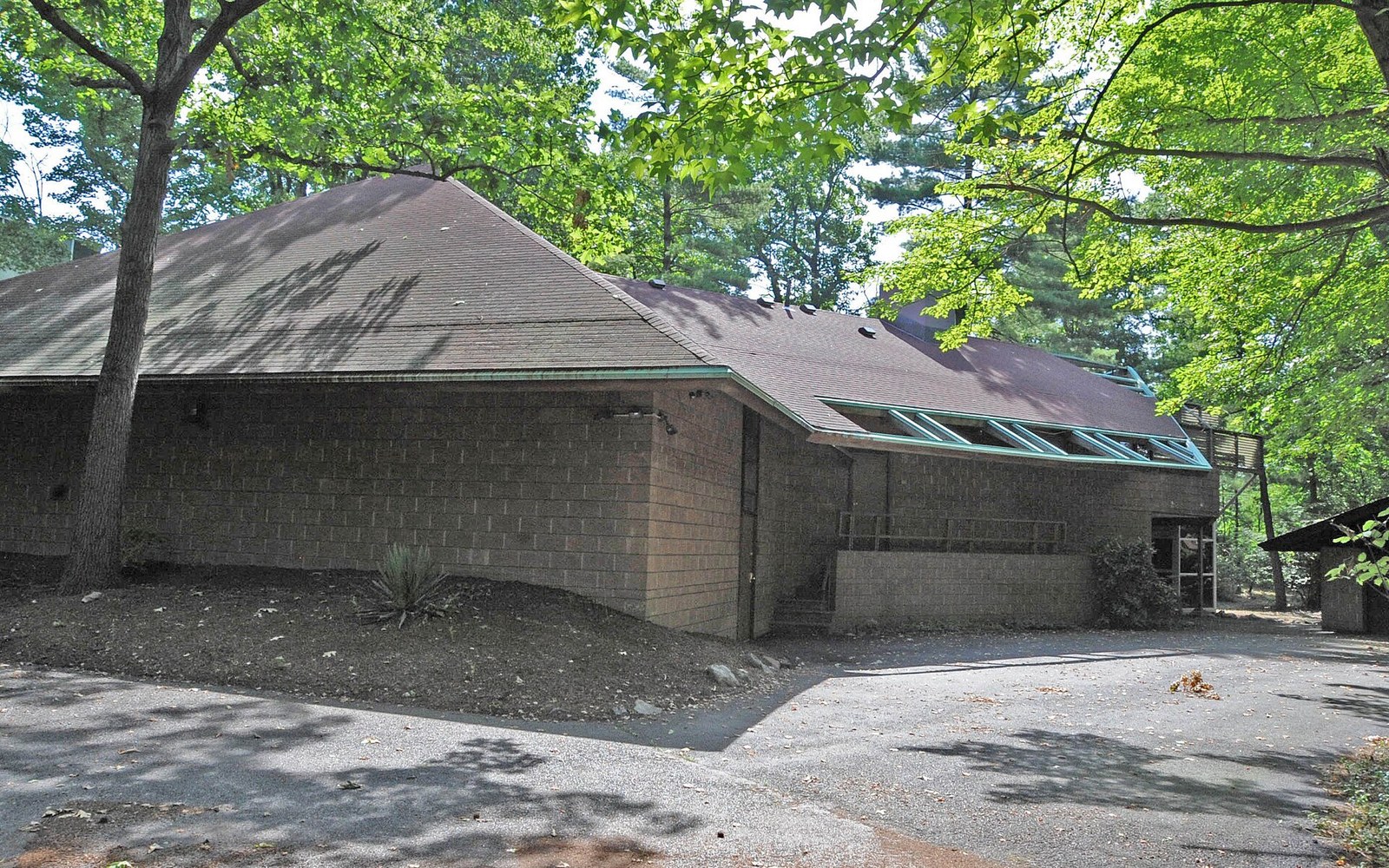
The Englewood Cliffs studio Van Gelder designed and opened in 1959. Its vaulted ceiling is audible on the records.
Photo: VAN GELDER STUDIO AND HOME ENGLEWOOD CLIFFS, BERGEN COUNTY NJ · Wikimedia Commons
Record labels: the rooms, the people, the catalogues.
Rudy Van Gelder recorded nearly every important Blue Note, Prestige, and Impulse! session between 1953 and the 1970s — first from a domestic room in New Jersey, then from a studio he designed himself.
The Englewood Cliffs studio Van Gelder designed and opened in 1959. Its vaulted ceiling is audible on the records.
Photo: VAN GELDER STUDIO AND HOME ENGLEWOOD CLIFFS, BERGEN COUNTY NJ · Wikimedia Commons
Rudy Van Gelder was a licensed optometrist when Alfred Lion first began booking his parents' house at 25 Prospect Avenue, Hackensack, New Jersey. The room was not a converted space so much as a purpose-adapted one: Van Gelder had installed microphones, wiring, and a control area within a domestic interior, and what resulted was an acoustic environment that owed as much to the proportions of a family living room as to any deliberate studio science. The ceiling height, the wooden floors, the irregular soft furnishings — none of these were engineered, yet all of them contributed to a sound that producers and musicians recognised immediately as distinct.
From the early 1950s through 1959, Blue Note Records, Prestige and others sent their artists to Hackensack as a matter of routine. Miles Davis recorded there. John Coltrane recorded there. Thelonious Monk, Sonny Rollins, Art Blakey — the room appears, audibly, on hundreds of canonical jazz sessions. The bass had weight without muddiness; the drums sat inside the mix rather than dominating it; horn transients were preserved without harshness. Van Gelder achieved this through microphone placement rather than extensive post-recording processing, working with relatively few mics and positioning them with unusual care relative to each instrument's physical projection pattern.
His approach to the piano became a signature. Van Gelder consistently placed the instrument with its lid open and miked it closely, favouring the upper registers of the strings while managing the low end through proximity rather than EQ. Pianists occasionally objected to where he positioned the bench; Van Gelder was not moved. He wore white gloves when handling master tape — a detail that circulated among engineers as both legend and practical instruction about the contamination risks of bare-hand contact with magnetic stock.
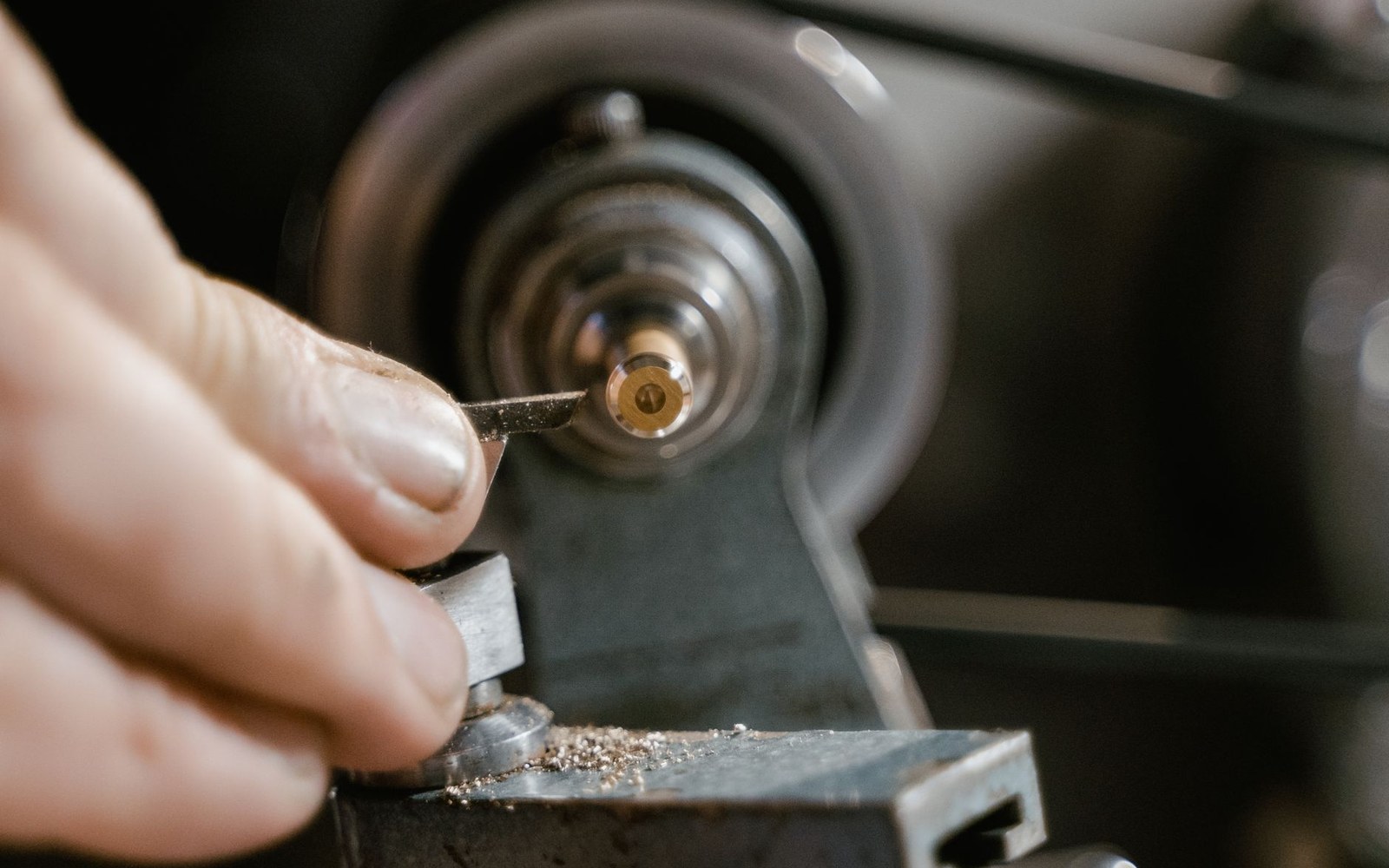
Between the tape and the shop there are four more trades: mastering, plating, pressing and printing. A label that could not book all four had no product at all.
Photo: Tima Miroshnichenko / Pexels
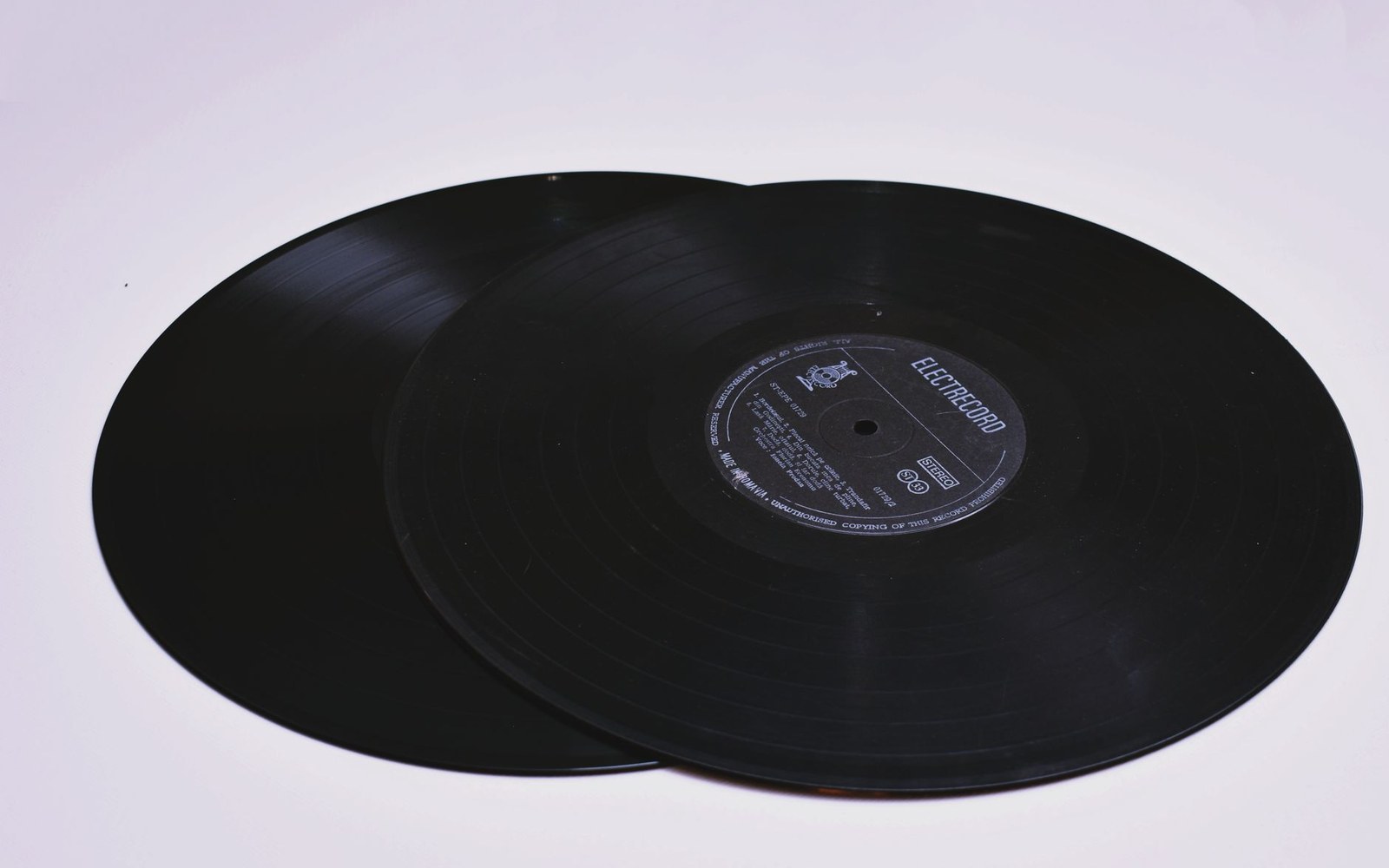
Sun 209, July 1954.
Photo: Diana ✨ / Pexels
In 1959 Van Gelder completed a purpose-built studio in Englewood Cliffs, New Jersey, designed in collaboration with architect David Henken. The building was constructed specifically for recording: the room's dimensions, ceiling angles, and surface treatments were chosen to produce a specific acoustic result rather than adapted from an existing structure. The main recording space was tall and asymmetrical, with a vaulted ceiling that gave the room its characteristic bloom — a natural reverberant tail long enough to fill the space around a jazz ensemble without obscuring attack or detail.
Van Gelder had trained as an optometrist, not an acoustician, and Rudy Van Gelder's biography at the Grammy database documents the self-taught nature of his technical development. He was nonetheless precise about every physical variable he could control: the placement of baffles, the distance between musicians, the angle of the recording console relative to the glass. The studio was built without a traditional isolation booth — Van Gelder preferred the ensemble to share air, believing that the acoustic relationship between players was as important as any individual instrument's recorded character.
The Englewood Cliffs room became the fixed address for some of the most documented jazz recordings of the 1960s. John Coltrane's sessions for Impulse! — including A Love Supreme, recorded in December 1964 — were made there. The Rudy Van Gelder Edition reissues, begun by Blue Note in the 1990s, returned to his original master recordings to produce transfers that Van Gelder himself supervised, often correcting decades of accumulated equalization from previous reissue programmes.
What the two rooms share — the Hackensack living room and the Englewood Cliffs studio — is the same underlying principle: that acoustic space is a musical instrument, and that the engineer's job is to record the room as honestly as the players in it.