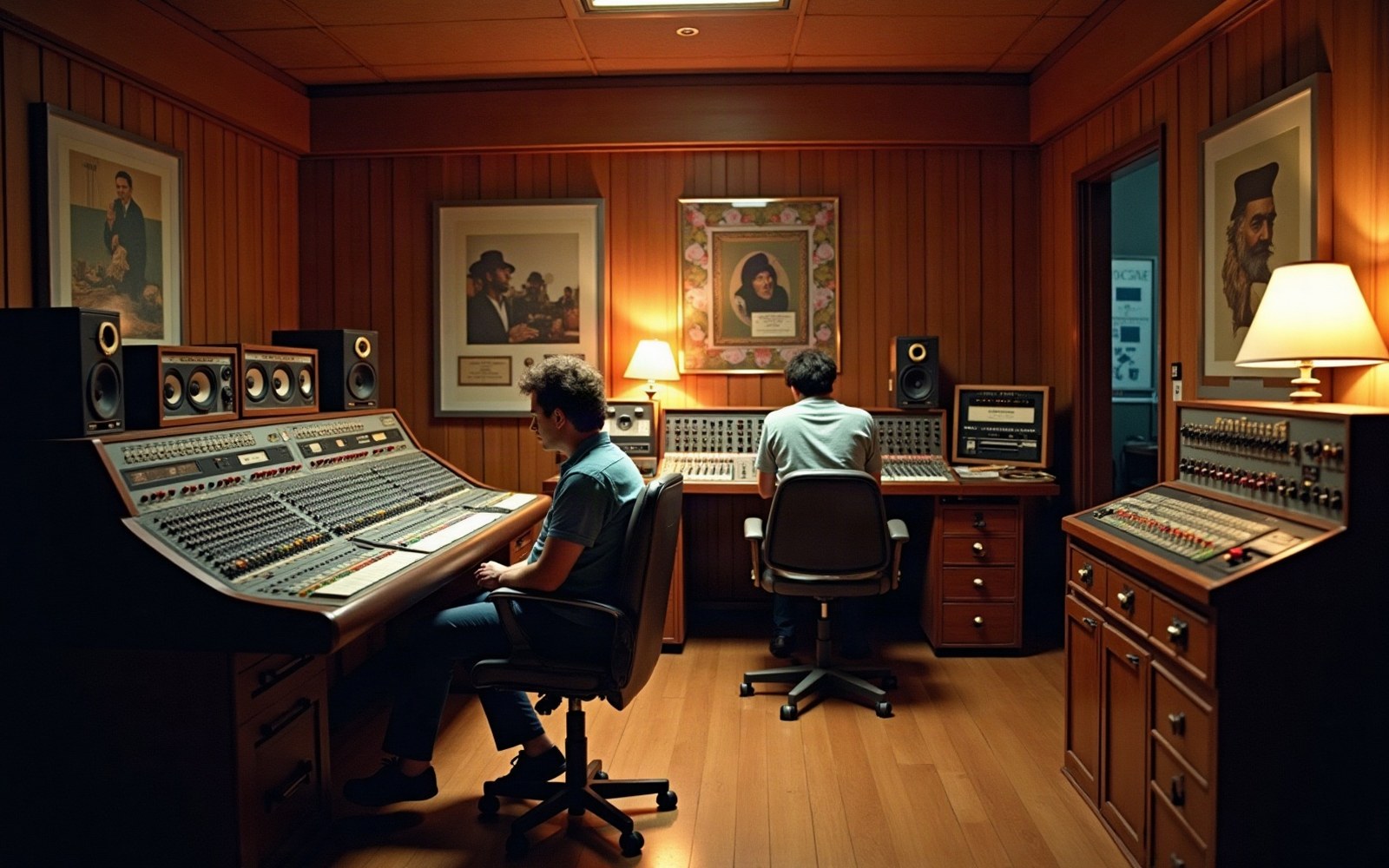
A small treated room. The acoustics of the space are as much a part of a label’s sound as its producer.
Record labels: the rooms, the people, the catalogues.
A small treated room. The acoustics of the space are as much a part of a label’s sound as its producer.
There is a tendency in label history to credit a sound to a producer, to a session man, to a star. The tendency is wrong, or at least incomplete. The third partner in any recording is the room itself — its dimensions, its surfaces, its accidental geometry. Three rooms, in particular, made sounds so distinctive that they functioned as house styles: Rudy Van Gelder's studio in Englewood Cliffs, New Jersey; the converted Capitol Theatre that became Stax's recording home in Memphis; and the basement at 2120 South Michigan Avenue, Chicago, where Leonard and Phil Chess pressed mud into electricity.
Each room was, in its way, an accident of circumstance. None was purpose-built at the outset to become the signature acoustic of a genre. All three ended up being exactly that.
| Van Gelder Studio, Englewood Cliffs, NJ (1959) | vaulted cathedral ceiling; Telefunken tube microphones; key sessions: Blue Note, Impulse!, Prestige |
| Stax Studio, 926 E. McLemore Ave, Memphis (from c. 1960) | sloped cinema floor retained from Capitol Theatre; roughly 20-foot room; house band: Booker T. & the M.G.'s |
| Chess Records, 2120 S. Michigan Ave, Chicago (1950s–60s) | low concrete-walled basement; natural compression from hard surfaces; key engineers: Malcolm Chisholm |
The sign went up on a house, not a building: Gordy ran Hitsville as premises and payroll at once.
Photo: Darya Sannikova / Pexels
Rudy Van Gelder first recorded in his parents' living room in Hackensack, New Jersey, but the sound that defines hard bop was captured in the studio he built at his home in Englewood Cliffs and opened in 1959. The room was not large by broadcast standards — but its most striking feature was a vaulted, cathedral-style ceiling, which Van Gelder had designed into the structure deliberately. That height prevented early reflections from collapsing onto the recording microphones. Transients — the sharp initial attack of a piano key, a snare hit, a bass string — could develop and decay without the ceiling cutting them short.
Van Gelder recorded nearly every significant Blue Note and Impulse! session of the late 1950s and 1960s in Englewood Cliffs. Alfred Lion and Francis Wolff would bring artists — John Coltrane, Herbie Hancock, Lee Morgan — to that room because the room was part of what they were purchasing. Van Gelder used Telefunken tube microphones, placed close, and he controlled what listeners heard from the other side of the glass with a precision that engineers elsewhere were still theorising about. The result was a sound with physical presence: drums that sat in three dimensions, piano that had weight rather than brightness. When Impulse! recorded Coltrane's A Love Supreme in 1964, the acoustic envelope of that Englewood Cliffs room is audible in every moment of side one — in the way the quartet breathes around each other, the spatial relationship between bass and kit.
The mixing board was primitive by the standards of what Atlantic Studios in New York possessed at the same moment.
Van Gelder was famously protective of his methods. Engineers who visited rarely understood what he had done, because much of it was in the room before a single piece of equipment was switched on. Height, absorption, reflection ratios — these were as much his intellectual property as any outboard gear.
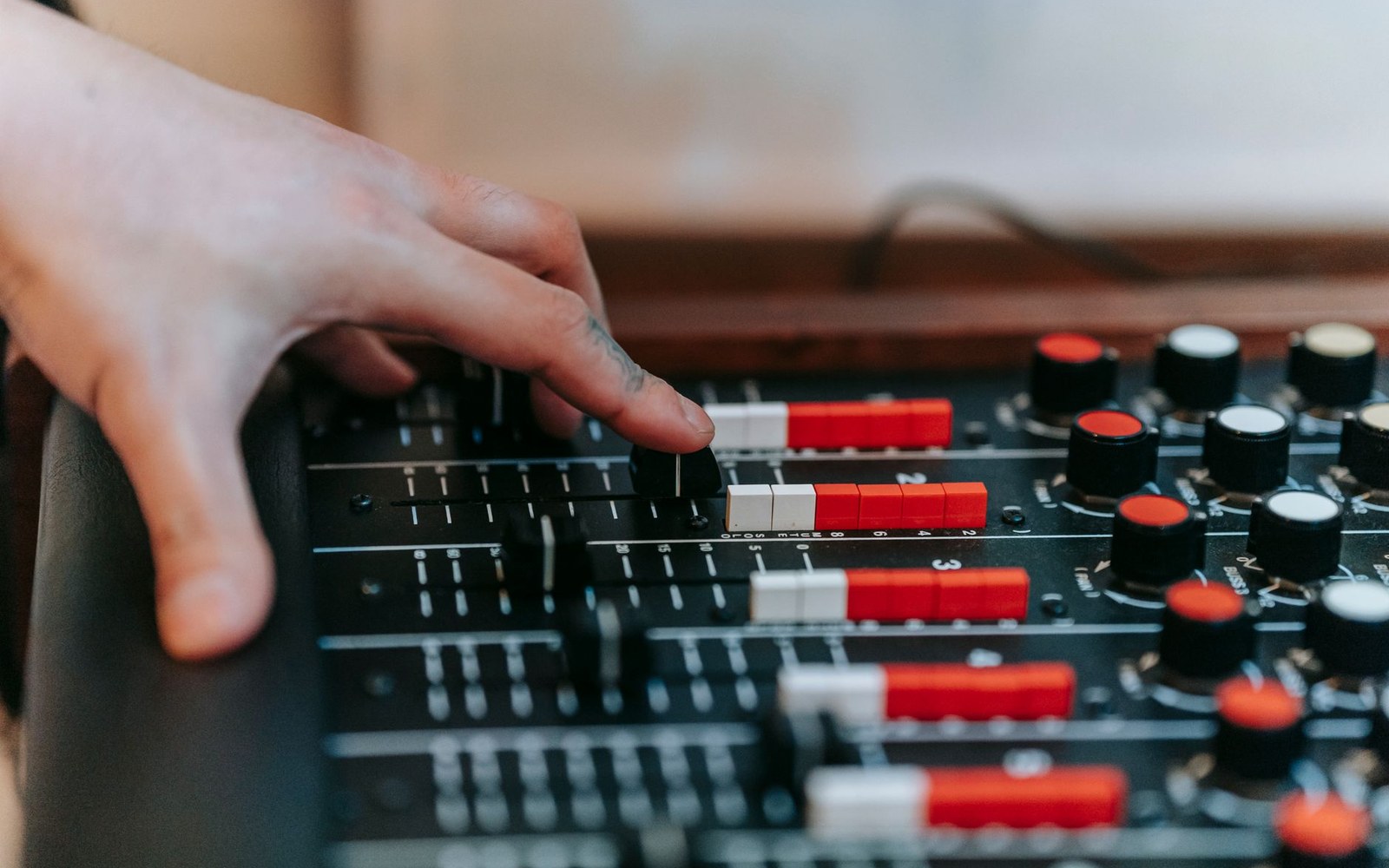
Van Gelder worked with few microphones, placed precisely, and did most of his deciding before the tape ran.
Photo: Anna Pou / Pexels
When Jim Stewart and Estelle Axton converted a disused cinema at 926 East McLemore Avenue in Memphis into a recording facility, they retained the sloped floor. The Capitol Theatre had been designed to carry sound from a raised screen to raked seating, and when that geometry was repurposed for recording, it produced an acoustic environment unlike anything a constructed studio would have delivered. The slope changed the path of low-frequency waves. Bass and kick drum developed a particular bloom — sustained, warm, never boomy — that is immediately identifiable on Stax recordings from the early and middle 1960s.
The room was also small. Studio dimensions ran to roughly twenty feet in one direction, which meant musicians recorded in close proximity; the bleed between instruments was not an error to be corrected but a condition to be managed. Steve Cropper and Donald "Duck" Dunn of Booker T. & the M.G.'s learned to play into the room rather than against it. When Otis Redding cut "Respect" there in 1965, the horn section and the rhythm section were essentially in the same acoustic space, which is why the track sounds like one organism rather than layered parts. The room enforced an arrangement.
The mixing board was primitive by the standards of what Atlantic Studios in New York possessed at the same moment. But the distribution contract that tied Stax to Atlantic also brought Atlantic engineers — including Tom Dowd — down to Memphis for certain sessions, and Dowd understood that the correct response to the Stax room was to capture it, not correct it. He placed microphones to pick up room sound alongside close-mic signals, a technique that preserved the sloped-floor bloom in the final mix.
The basement studio at 2120 South Michigan Avenue in Chicago operated under physical constraints that would have disqualified it from consideration by any studio designer of the period. The ceiling was low — under eight feet in the recording area — and the walls were concrete, which meant live, reflective surfaces with almost no absorption. Any acoustic consultant would have condemned the space as unsuitable for recording.
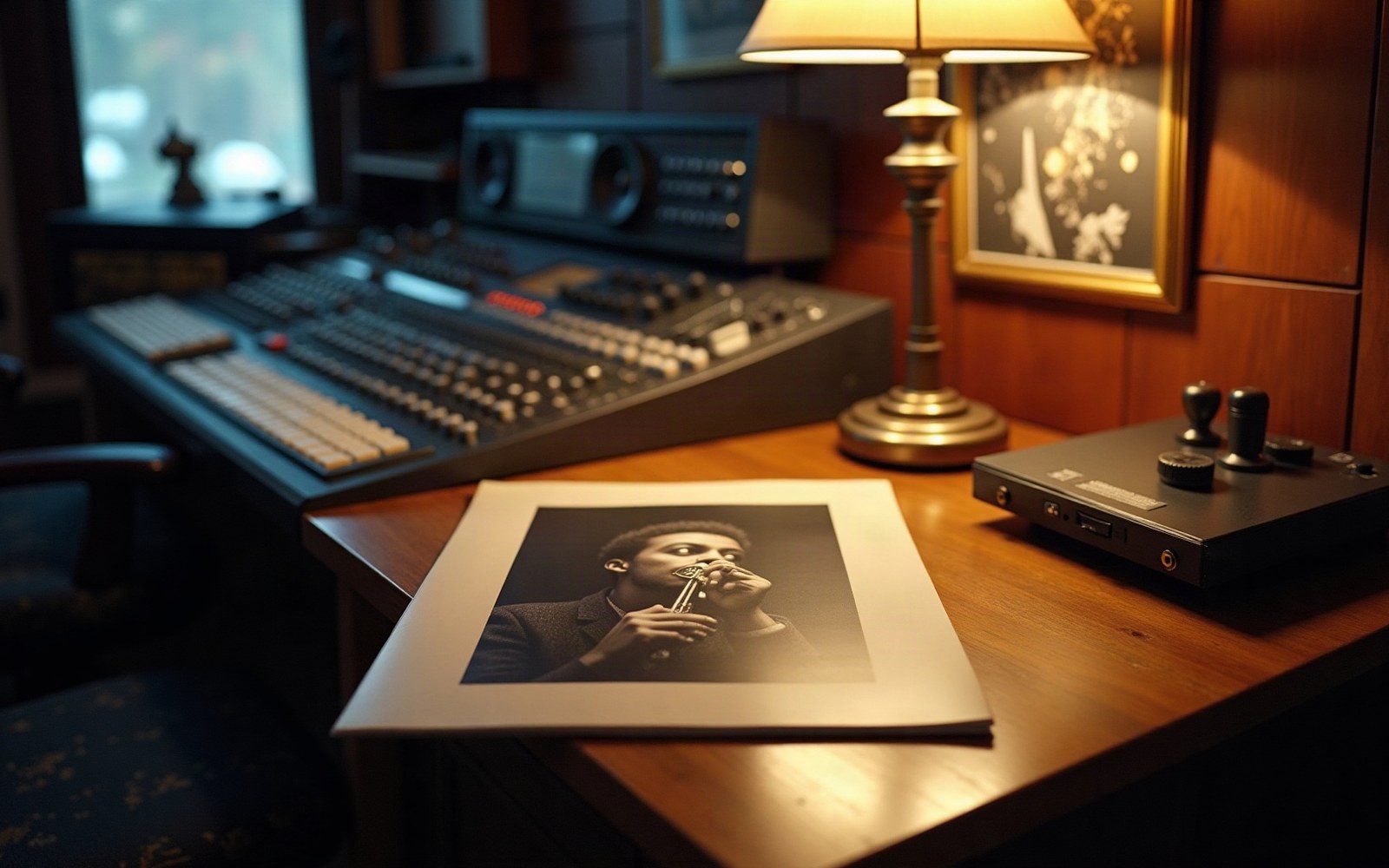
An LP sleeve under a lamp. The cover was the only part of a record a buyer could examine before paying for it.
What concrete and a low ceiling actually produced, for electric blues and early rock and roll, was compression before compression existed as a studio tool. When Muddy Waters or Chuck Berry played in that basement, the sound waves had nowhere to go. They bounced, stacked, and arrived at the microphone already thickened by the room itself. Leonard Chess understood this, even if he could not have articulated it in acoustic terms: he booked sessions at 2120 because the room did something to the electric guitar and the amplified voice that no other Chicago facility replicated. The Chess sound — mid-forward, dense, slightly compressed even on the quietest passages — is inseparable from those concrete walls.
Engineer Malcolm Chisholm, who worked regularly at 2120, positioned microphones to exploit rather than avoid the reflections. The Chuck Berry sides cut there after the label moved in carry the acoustic fingerprint of a low ceiling and hard surfaces. That fingerprint is not a limitation disguised as a virtue; it is the sound.
Three different rooms, three different acoustic problems, three different decisions to work with the room rather than against it. What unites them is the recognition, whether arrived at by training or by instinct, that the recording space is itself a creative instrument: tunable, teachable, irreplaceable. When Chess moved studios, when Stax was demolished, when a label tried to reconstruct its sound elsewhere, something was lost that no equipment list could recover. The room was never on the budget sheet. It was always on the record.