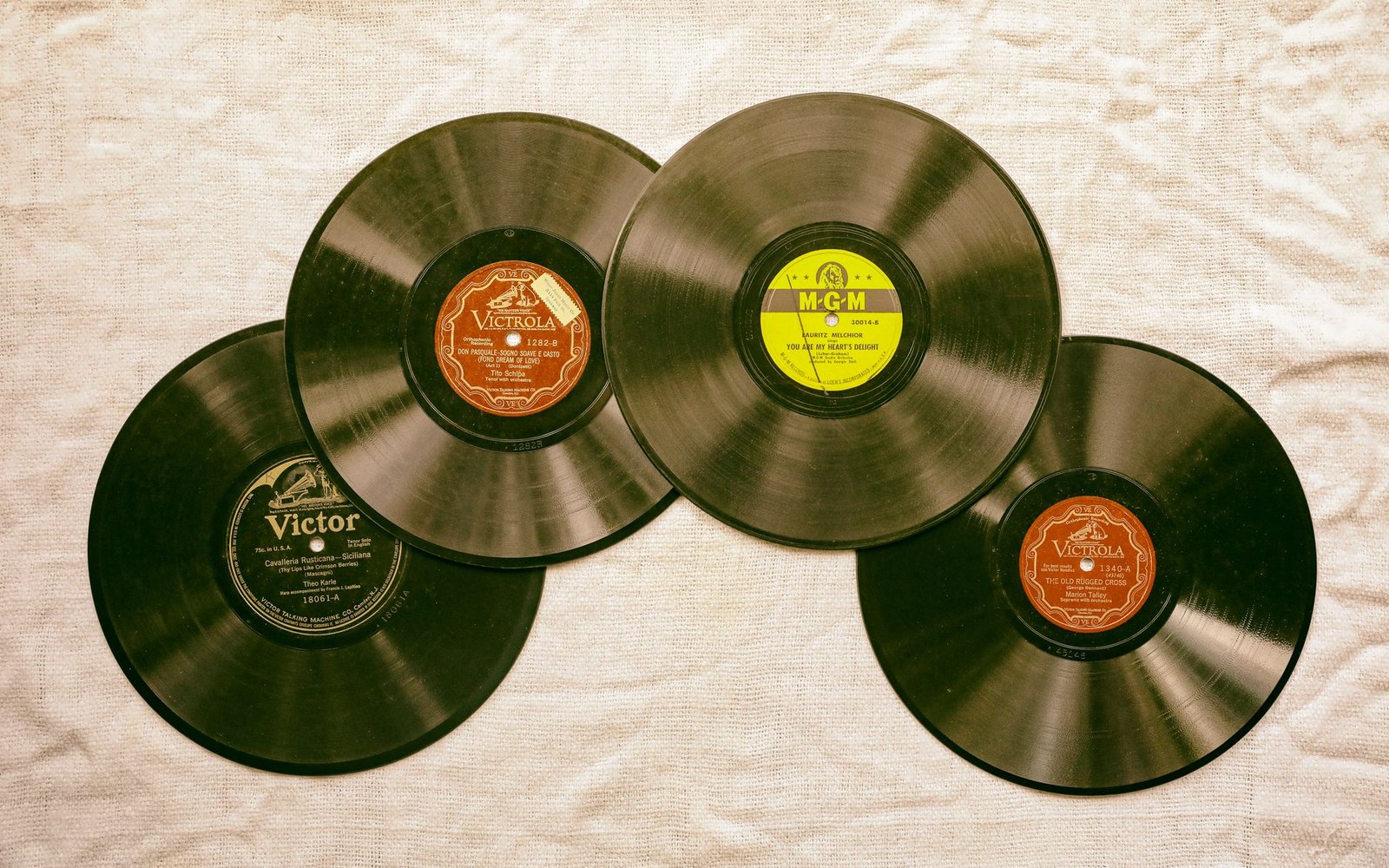
Lion and Wolff paid their musicians to rehearse before the session, which almost no other label of the period did.
Photo: Mick Haupt / Pexels
Record labels: the rooms, the people, the catalogues.
How a German émigré's obsession with jazz, a darkroom friendship, and one engineer's ear in New Jersey built the most coherent label catalogue in American music
Lion and Wolff paid their musicians to rehearse before the session, which almost no other label of the period did.
Photo: Mick Haupt / Pexels
On 6 January 1939, Alfred Lion paid twenty-three dollars to hire Carnegie Hall's adjoining studio in midtown Manhattan and recorded two pianists he had heard perform at a Spirituals to Swing concert the previous month: Albert Ammons and Meade "Lux" Lewis. The sides cut that afternoon — twelve-inch 78s pressed in editions of fifty — became the first releases on the label Lion registered a few weeks later as Blue Note Records. He was thirty years old, a Berlin-born jazz obsessive who had emigrated in 1938, and he had no particular business plan beyond a conviction that the music was not being recorded correctly.
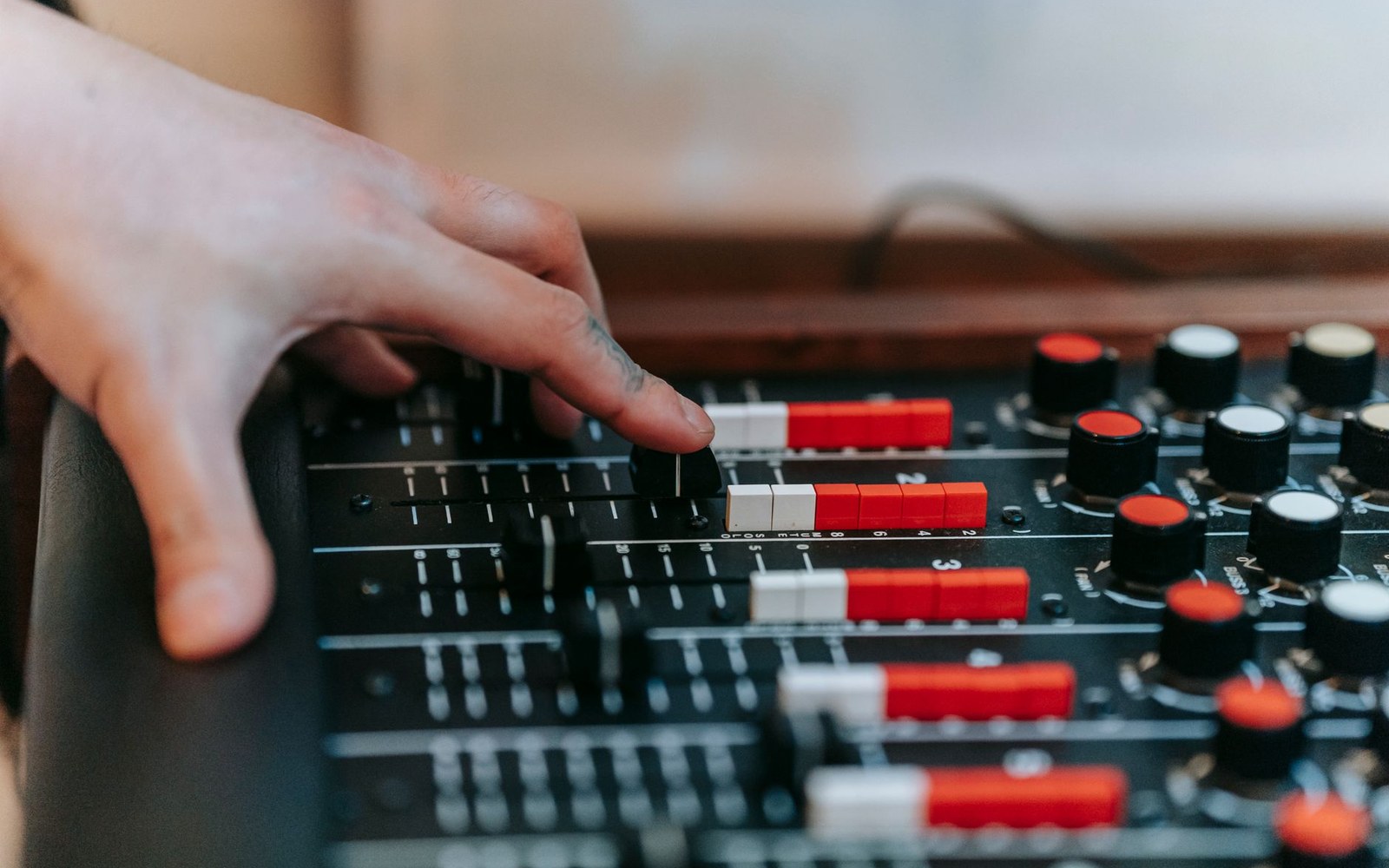
Van Gelder worked with few microphones, placed precisely, and did most of his deciding before the tape ran.
Photo: Anna Pou / Pexels
That conviction shaped everything that followed. Blue Note's earliest releases concentrated on boogie-woogie and New Orleans-inflected jazz at a moment when the major labels — Columbia, Decca, RCA Victor — were directing their attention and budgets toward the swing orchestras then dominating popular taste. The label's narrowness was a strategy: Lion recorded what the market was ignoring, gave musicians the rehearsal time labels routinely refused to fund, and pressed small runs that he sold by mail and through specialist shops. His friend Francis Wolff, who had followed him out of Berlin in 1939, became his partner, principal photographer, and, eventually, co-owner. Wolff's on-session photographs — shot with available light on 35mm film, unhurried, intimate — formed the visual archive from which the label's sleeve art would later be drawn.
Blue Note survived the wartime shellac shortage and emerged in the late 1940s committed to bebop. Lion signed Thelonious Monk in 1947, producing the pianist's debut recordings; the sessions yielded some of the earliest documentation of Monk's compositional language and cost Lion more in union fees and studio time than he recouped for years. The catalogue numbers from this period — BLP 5000-series ten-inch LPs introduced in 1951 — mark the label's transition from 78-rpm releases to the long-playing format.
Van Gelder continued engineering for Blue Note through the Liberty and subsequent United Artists and Capitol periods.
The defining upgrade in Blue Note's sound came when Lion began recording at Rudy Van Gelder's studio in Hackensack, New Jersey in 1952. Van Gelder, trained as an optometrist, had built a recording room in his parents' living room with an obsessive attention to acoustic geometry. The results — clean transients, a drum sound with genuine room, piano rendered without the boxiness common to studio recordings of the period — were immediately identifiable. Van Gelder's room in Hackensack, and later his purpose-built studio in Englewood Cliffs, became effectively an extension of Blue Note's creative process: musicians, engineer, and producer operating inside an established set of relationships that produced consistent results across hundreds of sessions.
The BLP 1500 and 4000 series — the twelve-inch LP catalogue numbers running from the mid-1950s into the 1960s — represent the period at which Blue Note's three productive forces converged. Lion produced; Van Gelder engineered; Reid Miles designed the sleeves. The combination generated records whose physical object and sonic content were of equal ambition, which was not a common condition in the American record industry of that moment.

The unit of the whole business is three hours in a room with a clock running.
Photo: Anna Pou / Pexels
Reid Miles joined Blue Note's design programme in 1956 and continued until 1967, responsible for the majority of the catalogue's most recognisable covers. His method was economical: Wolff's photographs, often cropped severely, placed against flat colour fields or stark black grounds; type set in Futura or Franklin Gothic at scales that treated the letterforms as compositional elements rather than labelling. Catalogue numbers and personnel lists appeared in formats that would become as recognisable as the music itself — BLP 4003 (Art Blakey, Moanin'), BLP 1577 (John Coltrane, Blue Train), BLP 4157 (Lee Morgan, The Sidewinder).
Miles worked largely from his apartment, without art direction in the conventional sense. Lion approved covers, but the working relationship was one of mutual trust. The result, across more than five hundred cover designs, was a house style that managed to be both instantly consistent and formally varied — a difficult balance that Blue Note's catalogue achieved without the kind of corporate design management that would have been necessary at a major label.
Lion's production method was unusual and widely noted by the musicians who worked with him. He paid for rehearsal sessions separate from recording dates — a significant expense for a small label — on the grounds that unrehearsed music produced inferior recordings. He recorded musicians he believed in across periods of creative development, creating label relationships of unusual depth. Horace Silver appeared on Blue Note from 1952; Jimmy Smith from 1956; Herbie Hancock from 1962. The label documented the transition from hard bop to post-bop and into the modal experiments of the early 1960s without abandoning its identity, partly because Lion's taste was catholic within a defined range and partly because Van Gelder's approach translated across styles without becoming a formula.
The RIAA did not certify Blue Note albums in any quantity during this period — the catalogue was critically esteemed and commercially modest. Lion was not building a pop business; he was building a document, and he knew it.
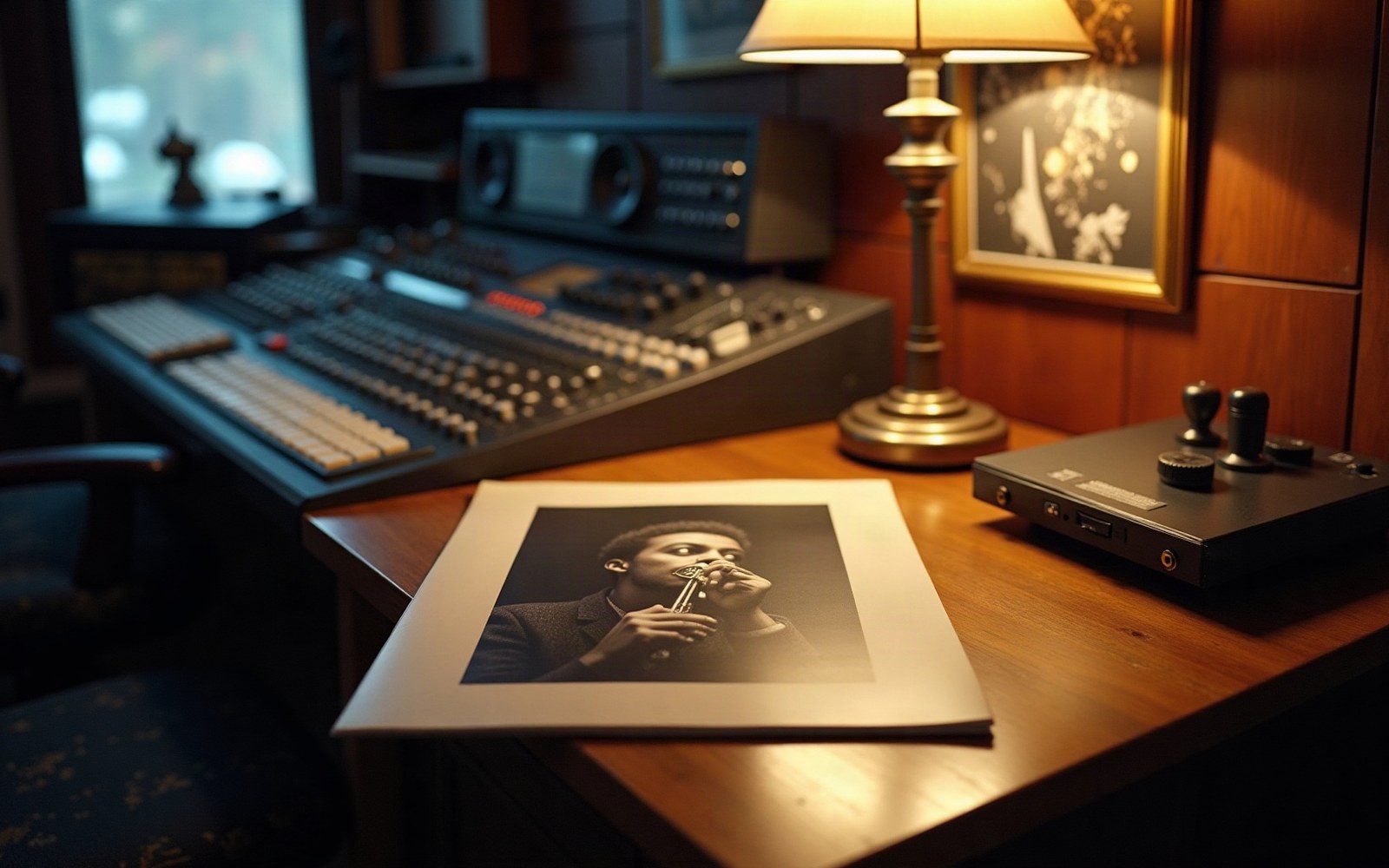
An LP sleeve under a lamp. The cover was the only part of a record a buyer could examine before paying for it.
By the mid-1960s, Lion's health was in decline and the costs of running the label with its meticulous production standards had become unsustainable. In 1966, Lion and Wolff sold Blue Note to Liberty Records, a Los Angeles-based label then building a portfolio of acquired imprints. Lion remained briefly as an advisor and then stepped back entirely; he died in 1987. Wolff died in 1971, while still photographing sessions. Van Gelder continued engineering for Blue Note through the Liberty and subsequent United Artists and Capitol periods.
The acquisition began a long interval of diminished creative focus. Liberty's corporate priorities were not Lion's, and the label's output through the late 1960s and 1970s became inconsistent. The catalogue, however, survived intact — the master recordings, the Wolff photographs, the Miles covers — and when Capitol relaunched Blue Note in 1985 under Bruce Lundvall, the back catalogue became the foundation of a sustained reissue programme that established the label's reputation for a new generation of listeners. The founding session's twenty-three dollars had purchased something that turned out to hold its value across decades of ownership changes, format shifts, and industry consolidation.