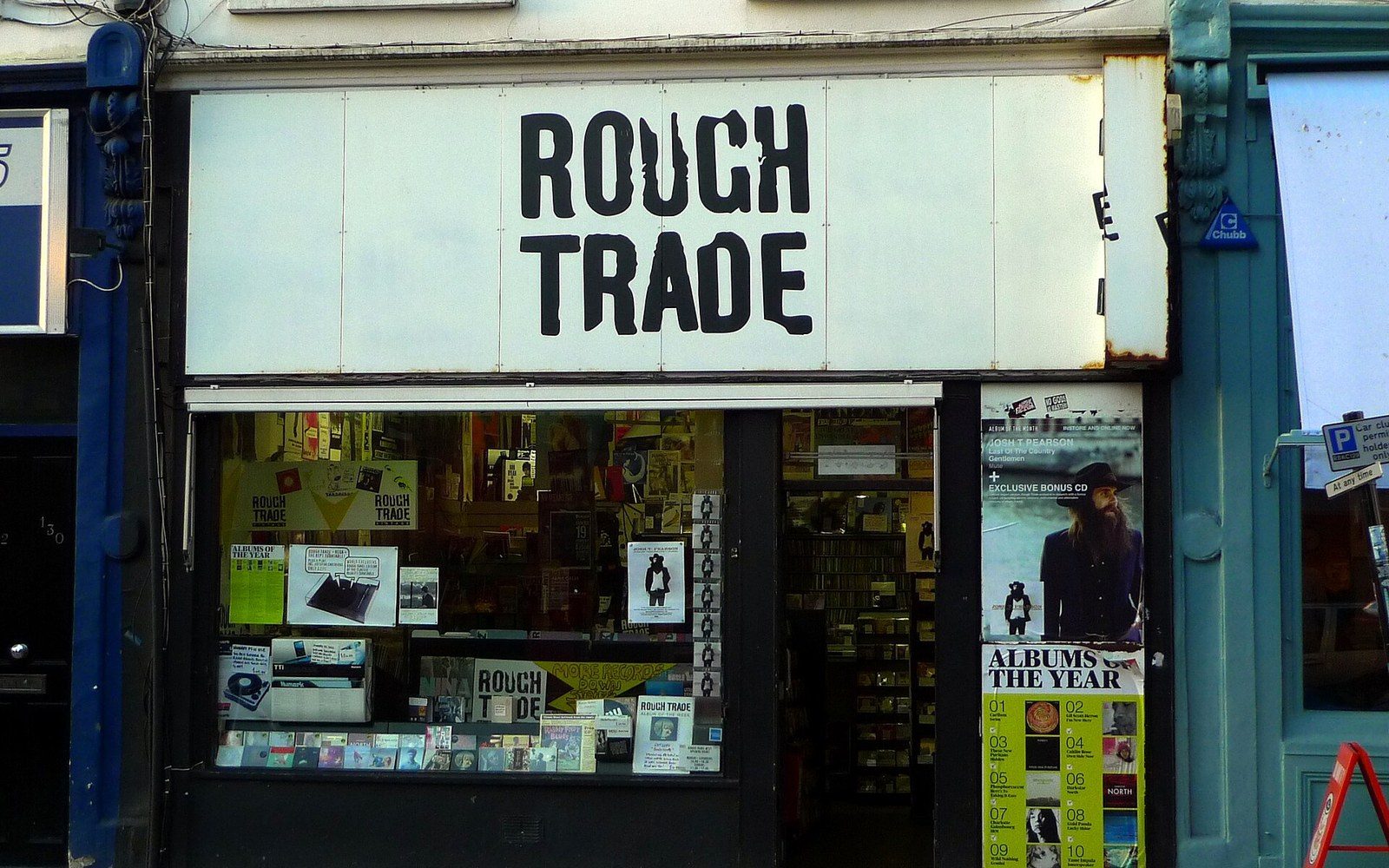
The Rough Trade shop in Notting Hill. The counter was the label’s A&R department.
Photo: Rough Trade, Notting Hill, W11 · Wikimedia Commons
Record labels: the rooms, the people, the catalogues.
A record shop that became a label, and a distribution network that became an alternative economy: Rough Trade, Notting Hill, from 1976.
The Rough Trade shop in Notting Hill. The counter was the label’s A&R department.
Photo: Rough Trade, Notting Hill, W11 · Wikimedia Commons
Geoff Travis opened Rough Trade on Kensington Park Road in Notting Hill in 1976, stocking import punk and reggae records that London's chain stores would not carry. The shop itself functioned as continuous A&R: records that sold across the counter told Travis which sounds had a constituency, and which labels needed a UK outlet. By 1978 that logic had become a label. The first Rough Trade release was a single by French act Métal Urbain, licensed and pressed in a small run and distributed by hand.
The mechanism that made the label viable was the Cartel — the network of regional independent distributors that Rough Trade coordinated from the late 1970s onward to move records outside major-label channels. A pressing in Liverpool or Edinburgh could reach specialist shops nationally without touching a major's warehouse. The Cartel kept margins thin and credit terms tight, but it meant that an act with five hundred committed buyers could generate a viable release without a distribution deal from a company that had no interest in signing them.
Travis ran the label on a broadly co-operative model: artists retained a larger share of royalties than the industry standard, and the label was willing to release work that had no obvious commercial pathway. Scritti Politti, the Young Marble Giants and the Fall were among the acts whose early records Rough Trade pressed and distributed when no one else would. The back catalogue built slowly and without pop radio support.
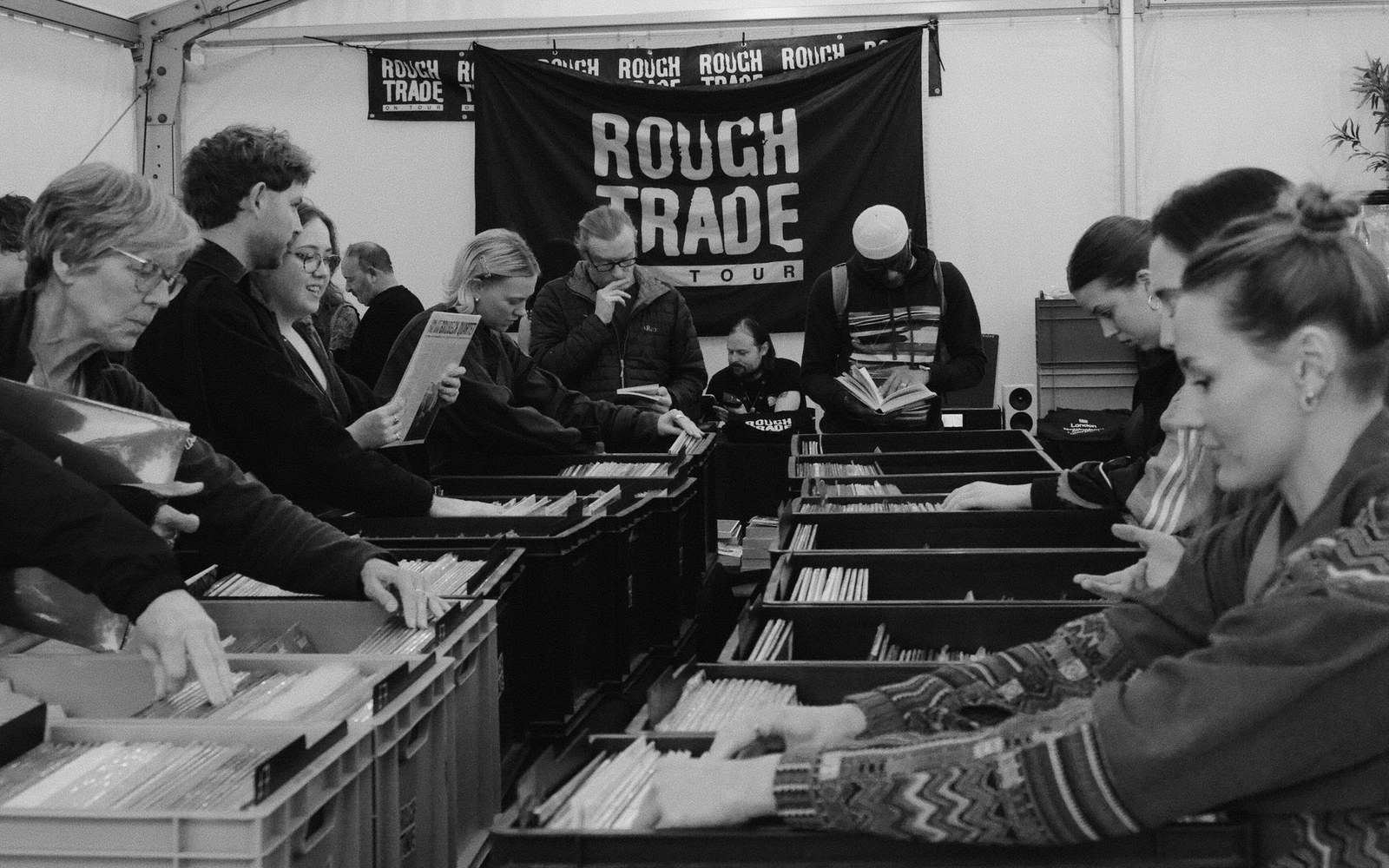
The shop counter as market research: what sold on Saturday decided what got pressed on Monday.
Photo: Ian / Pexels

An LP sleeve under a lamp. The cover was the only part of a record a buyer could examine before paying for it.
The Smiths signing in 1983 changed the scale of the problem. The band had generated genuine public demand before the ink was dry, and their debut album reached the UK top ten in 1984 — a commercial result the Cartel infrastructure had not been engineered to service. Rough Trade met it, but the experience revealed the structural ceiling of a distribution network built for small runs. The label survived the Smiths years, but the Cartel collapsed in 1991 amid creditor difficulties, and Rough Trade Records itself went into administration that same year before being revived in 2000.
The shop on Kensington Park Road is still trading. The founding logic — retail as filter, pressing as commitment — remains the clearest statement of what an independent label, at its most functional, actually is.