
The reissue: a record already recorded and already recouped, sold again in a new casing.
Photo: Brett Jordan / Pexels
Record labels: the rooms, the people, the catalogues.
When consumers replaced their record collections with compact discs, the industry sold them the same music twice — and the economics were transformational.
The reissue: a record already recorded and already recouped, sold again in a new casing.
Photo: Brett Jordan / Pexels
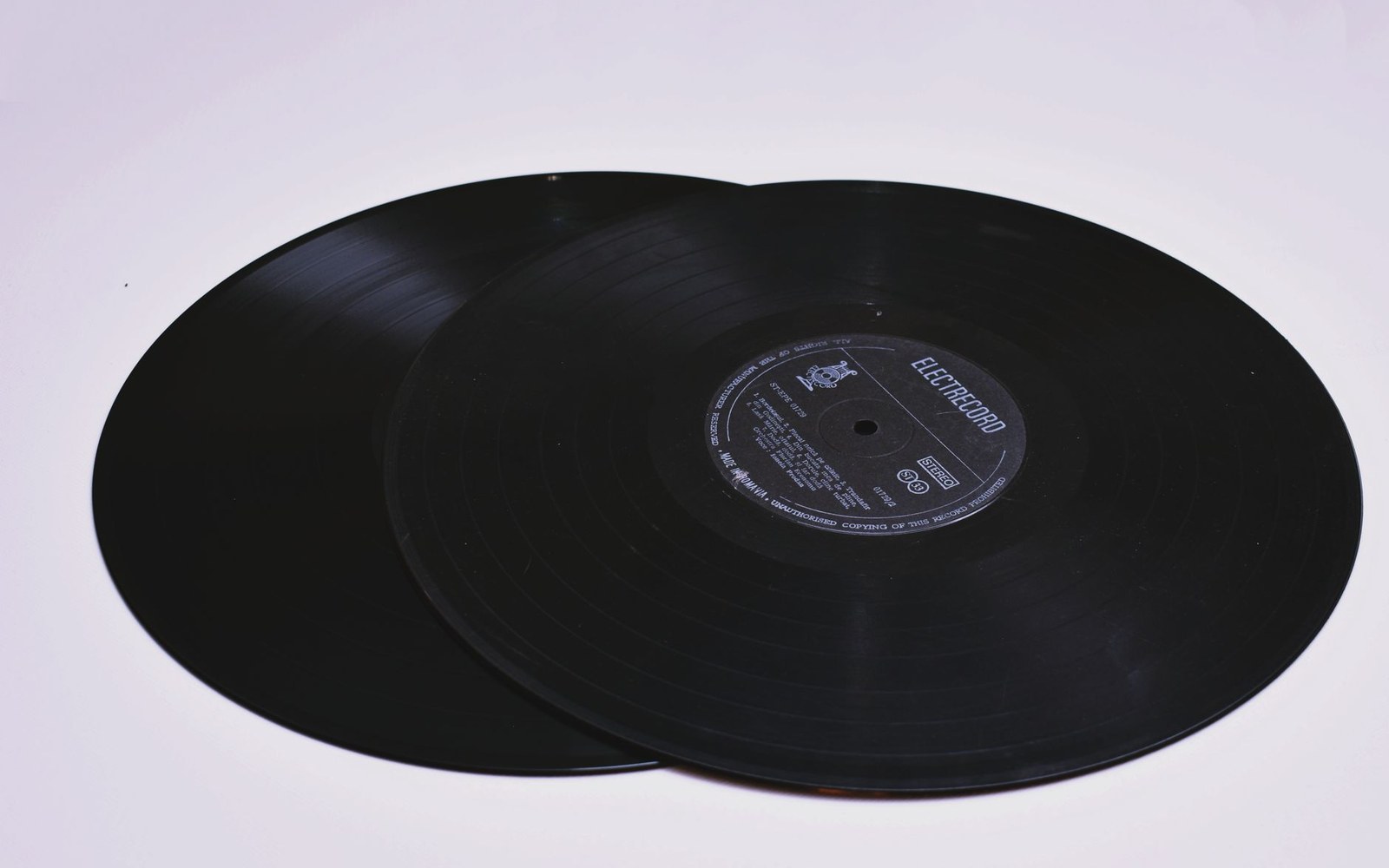
Sony and Philips introduced the compact disc commercially in Japan in October 1982, with European and American availability following in 1983. The format offered consumers demonstrable advantages — no surface noise, no degradation through repeated play, no side breaks on longer works — and the industry moved to meet demand that, for once, it had not manufactured. By the late 1980s, CD unit sales in the United States had overtaken LP sales, a crossover the RIAA documented in its annual shipment data, and labels quickly understood that the transition presented an opportunity beyond mere format substitution. Consumers already owned the albums; they now wanted them again, cleaned up and housed in a jewel case. The back catalogue — every label's body of older recordings — became, almost overnight, the industry's most reliable revenue engine.
The mechanics were straightforward. A label holding master recordings could license the same music to a CD pressing plant, produce a product at relatively low marginal cost, and ship it into a market already primed to buy. No artist development budget was required; no promotional tour; no uncertainty about whether the record would find an audience. The audience was proven, and it was willing to pay a premium. CD list prices in the late 1980s ran considerably above equivalent LP prices, a differential the majors defended partly on manufacturing cost grounds and partly because they could.

Van Gelder worked with few microphones, placed precisely, and did most of his deciding before the tape ran.
Photo: Anna Pou / Pexels
The labels best positioned to exploit this were those with the deepest and most prestigious catalogues. Columbia Records, by then part of CBS before its 1988 acquisition by Sony, could draw on decades of classical, jazz, rock and pop masters. Warner Music Group and PolyGram similarly mined holdings accumulated across decades of acquisition and organic signing. PolyGram in particular held Deutsche Grammophon, Philips Classics and Decca, giving it an outsized share of the classical reissue market at a moment when audiophiles — the demographic most likely to buy a CD player in 1983 — were disproportionately classical listeners.
Atlantic Records, with its unbroken run of rhythm-and-blues and rock masters from the late 1940s onward, issued and reissued steadily. Ahmet Ertegun's deal-making over the preceding decades meant Atlantic owned its masters outright in most cases — a crucial distinction. Stax, by painful contrast, had discovered in the early 1970s that its distribution agreement with Atlantic, and later its relationship with Gulf + Western, had left the ownership of key masters in dispute; those recordings cycled through complex licensing arrangements before stable reissue programmes became possible. The lesson the CD era reinforced was one that the contract had always implied: whoever owned the master recording owned the revenue stream.
Motown's catalogue presented its own chapter. Berry Gordy sold Motown Records to MCA in 1988 for a reported $61 million, a figure that reflected precisely the CD-era value of the Hitsville masters — decades of hit singles, all recorded in-house, all tightly controlled.
By the close of the 1980s the RIAA's certification rolls were accumulating CD-era platinum awards on titles that had first been certified gold on vinyl years earlier. The Rolling Stones' Exile on Main St., the Beatles' catalogue on Apple-via-Capitol, Miles Davis's Kind of Blue — all moved through the certification system again as fresh units shipped. Kind of Blue alone, certified platinum by the RIAA in 1990, would eventually accumulate multi-platinum status across subsequent re-certifications as streaming added to the count.
Sun 209, July 1954.
Photo: Diana ✨ / Pexels
The reissue trade did not last at that pitch. As the decade turned and the replacement cycle exhausted itself — most consumers who wanted Abbey Road on CD had bought it — growth slowed, contributing to the conditions that made the 1990s increasingly reliant on new-format gimmicks and superstar blockbusters to sustain IFPI-level revenue. But for roughly six years, the silver disc had made the archive worth more than the front line.