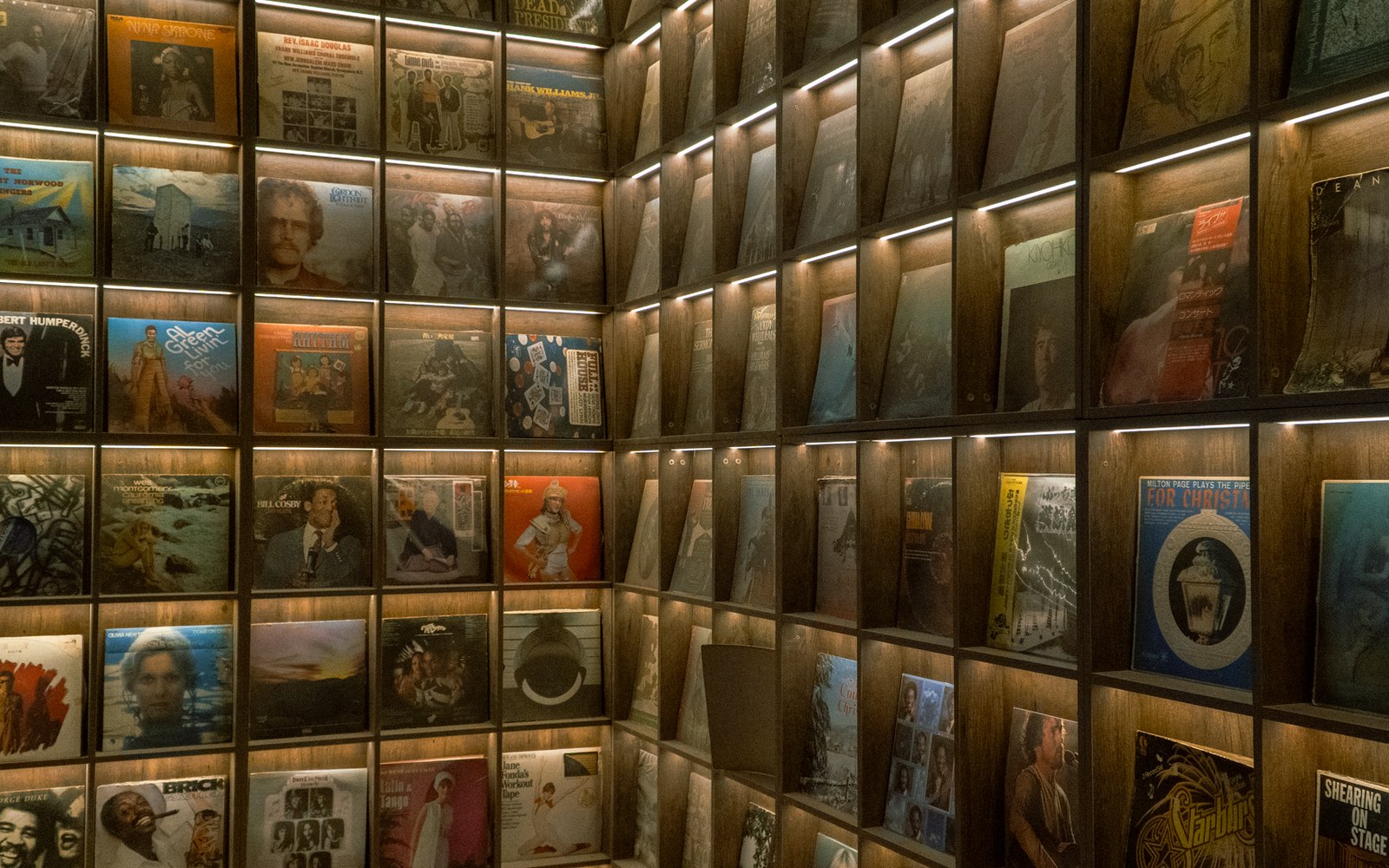
Shelved catalogue. Under streaming an old recording earns without further promotional spend.
Photo: Phát Trương / Pexels
Record labels: the rooms, the people, the catalogues.
How streaming turned a label's back catalogue from afterthought to primary collateral
Shelved catalogue. Under streaming an old recording earns without further promotional spend.
Photo: Phát Trương / Pexels
For most of the recorded music industry's history, the back catalogue was understood as residual: revenue that kept flowing after the promotional spend was over, useful for smoothing the quarterly figures but subordinate in strategic terms to whatever was releasing next week. The business ran on the new. A label's value lay in its A&R pipeline, its radio relationships, its capacity to manufacture and shift physical units. The catalogue sat behind all of that, accumulating quietly.
Streaming ended that logic. It did not do so immediately — the transition from downloads to subscription audio took the better part of a decade — but by the time IFPI's Global Music Report 2023 confirmed that streaming accounted for 67 percent of global recorded music revenue, the structural shift was complete. In a subscription economy, every track in a catalogue earns a micro-royalty every time it is played, indefinitely, without the label spending anything further on manufacturing, distribution or promotion. The old recordings do not depreciate. They accumulate. A catalogue of sufficient depth and cultural durability is, in financial terms, closer to a bond than a product.
| IFPI Global Music Report 2023 | streaming = 67 percent of global recorded music revenue |
| Hipgnosis Songs Fund listed on London Stock Exchange | 2018 |
| Hipgnosis catalogue spend | exceeded $1 billion within roughly two years of listing |
| Bob Dylan songwriting catalogue acquired by Universal Music Group | announced December 2020; value widely reported at approximately $300 million |
| Bruce Springsteen masters and publishing sold to Sony Music Entertainment: 2021; reported value approximately $500 million | |
| Bob Dylan master recordings sold to Sony Music Entertainment | 2022 |
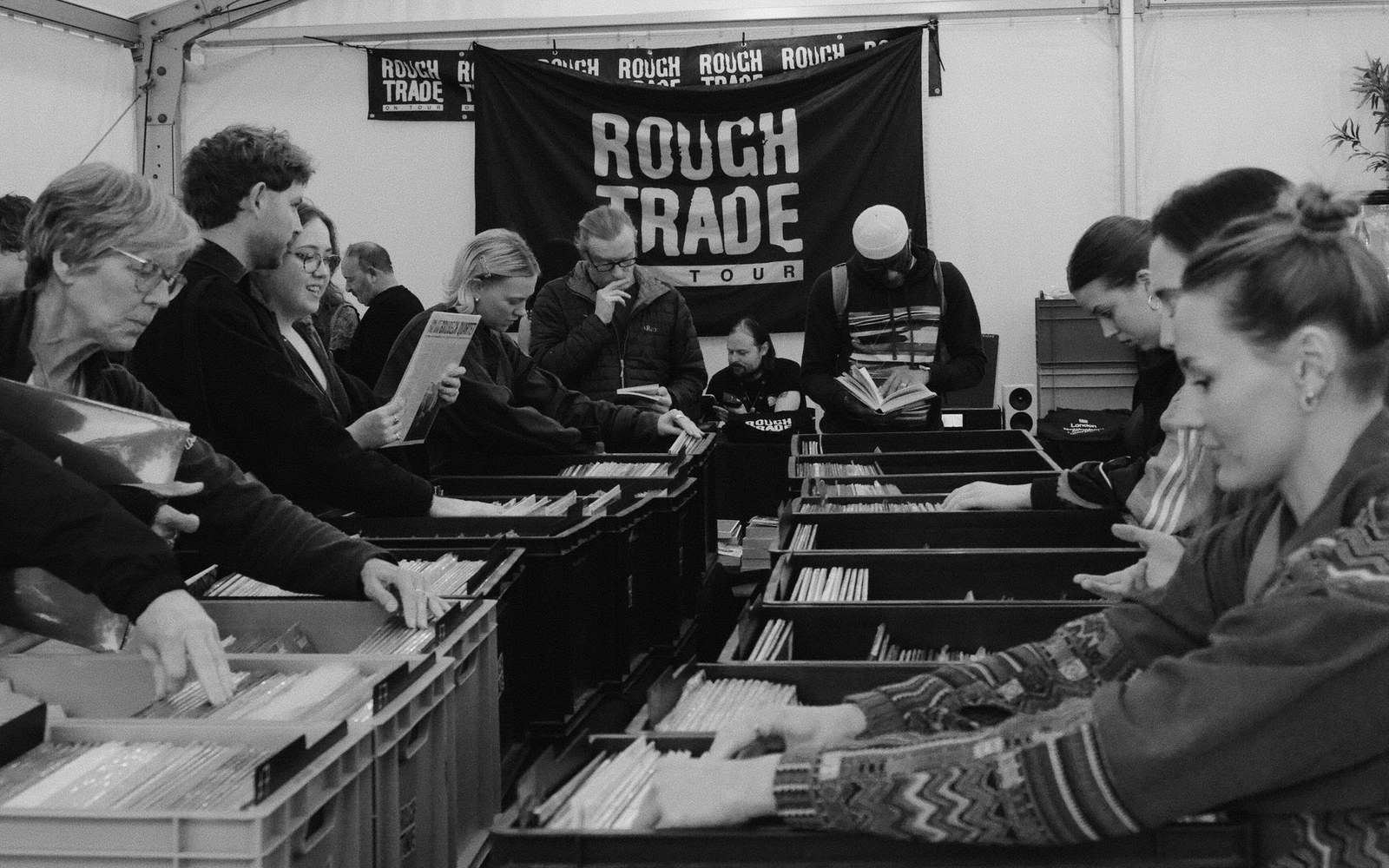
The shop counter as market research: what sold on Saturday decided what got pressed on Monday.
Photo: Ian / Pexels
The investment community understood the implication before most label executives said so publicly. If streaming revenue from older recordings was now predictable, recurring and largely divorced from marketing expenditure, then a catalogue of master recordings was a cash-generating asset that could be valued, securitised and traded like any other. Merck Mercuriadis, a former manager, launched the Hipgnosis Songs Fund on the London Stock Exchange in 2018 on precisely this thesis. The fund acquired publishing catalogues — the underlying compositions rather than the master recordings — but the logic was identical: streaming had converted song ownership from a speculative to a yield-bearing position. Within two years of listing, Hipgnosis had spent more than a billion dollars acquiring catalogues from artists including Shakira, Neil Young and Chrissie Hynde. The fund's existence, and the speed with which institutional capital followed it into the sector, demonstrated that outside investors now priced catalogue more aggressively than the labels themselves had historically done.
The catalogue market moved in parallel. In December 2020, Universal Music Group announced the acquisition of Bob Dylan's entire songwriting catalogue in a deal whose value was not disclosed in precise terms but was reported at the time by multiple sources, including Universal's own press communications, as one of the largest publishing transactions in the industry's history — widely placed in the range of three hundred million dollars. Dylan followed it, in 2022, by selling his master recordings to Sony Music Entertainment. Both transactions, coming from an artist whose commercial peak lay decades in the past, were legible only against the streaming backdrop. The recordings were not being acquired for their chart potential. They were being acquired because they would stream forever.
The same period produced dozens of comparable deals: Bruce Springsteen sold his masters and publishing to Sony in 2021 for a reported five hundred million dollars; Sting sold his publishing to Universal; the Red Hot Chili Peppers, Mötley Crüe and David Bowie's estate all became subjects of major catalogue transactions. These were not one-offs. They constituted a market, and the market had a price-discovery mechanism driven by streaming data. A catalogue's value could now be modelled from publicly available consumption figures, projected forward, and discounted to a present value with reasonable confidence. That had never been true when the revenue depended on physical retail, where a reissue programme required fresh spend and could fail.

Between the tape and the shop there are four more trades: mastering, plating, pressing and printing. A label that could not book all four had no product at all.
Photo: Tima Miroshnichenko / Pexels
The consequences for the financing of new music are direct and not entirely comfortable. If a label's most reliable income derives from its existing catalogue, the economic incentive to invest heavily in new and unproven artists diminishes. A new signing carries all the traditional risks — recording costs, marketing spend, the probability of commercial failure — without the certainty that the resulting masters will ever reach the streaming velocity required to become a catalogue asset worth holding. The expected value of a new recording, in a streaming model, is lower than it was in a physical one for most artists below the very top of the market, because the per-stream rate paid by the platforms is a fraction of the per-unit margin earned on a sold CD or LP.
Several structural responses have emerged. Advance sizes at major labels have, for artists without a demonstrated streaming base, contracted relative to the late CD era. Labels have moved toward shorter-term licensing arrangements in some markets, retaining the master for a fixed period rather than in perpetuity, which reduces the artist's leverage while protecting the label's catalogue position. Distribution deals — under which a label handles delivery and takes a smaller share, leaving the master with the artist — have proliferated at the independent level, partly because the label has less appetite to fund the recording itself when the return on that investment looks uncertain. Artists with an established catalogue, conversely, find themselves in a historically unusual position of strength: they own, or have claims on, an asset that institutional capital actively wants.
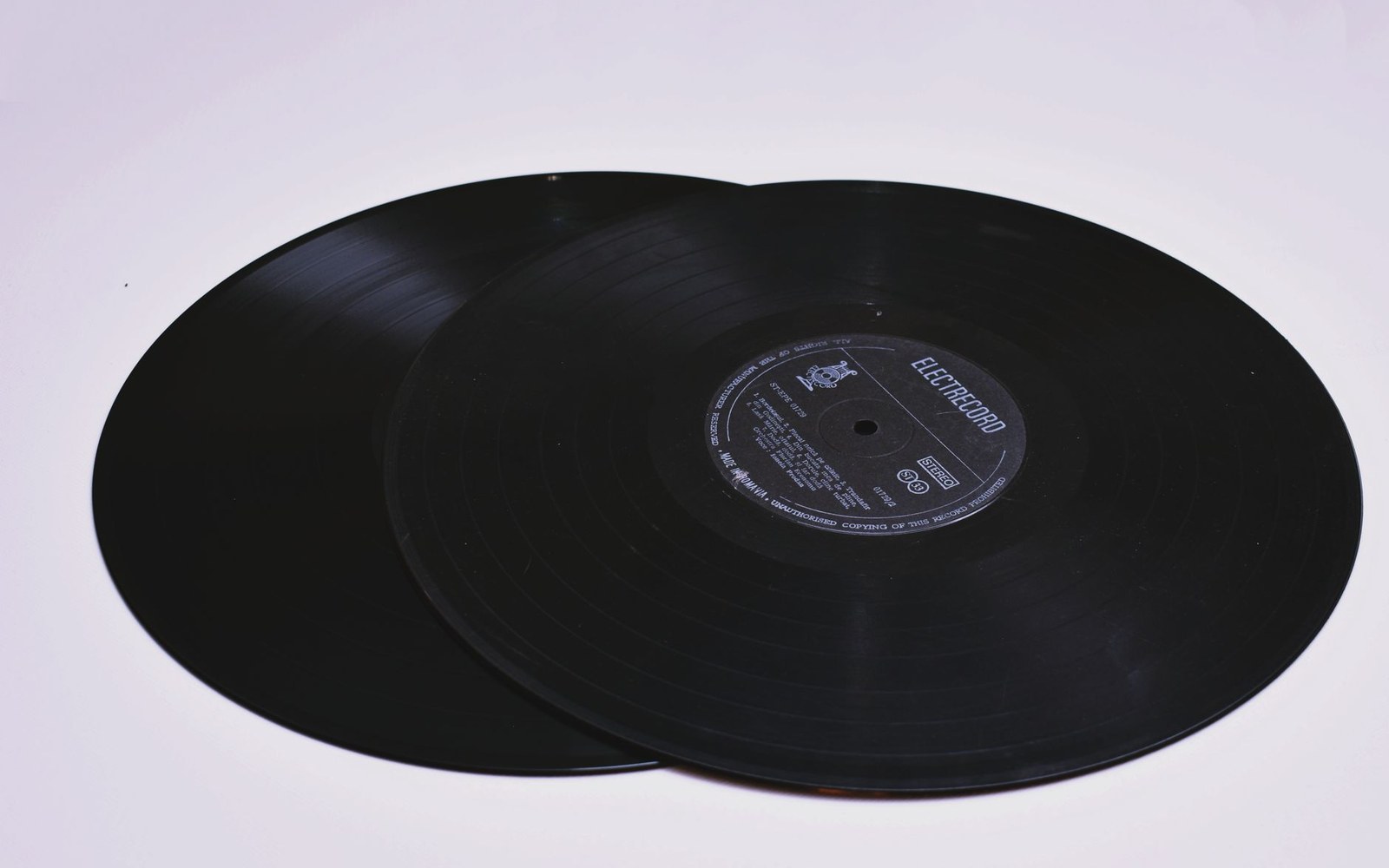
Sun 209, July 1954.
Photo: Diana ✨ / Pexels
The irony is structural. Streaming was supposed to democratise the recorded music business by removing the barriers of physical manufacturing and retail. In one sense it did: an independent artist can now place a recording on every major platform without a label. But the shift also concentrated the strategic value of the business in deep, durable, professionally recorded catalogues built during the decades when the majors controlled both manufacturing and distribution. Universal Music Group, Sony Music Entertainment and Warner Music Group hold catalogues assembled over seventy-plus years; those catalogues now generate the revenue that finances the next generation of signings. The asset that streaming made primary is, almost by definition, the asset that the three remaining majors hold in greatest quantity.
What a label is, in the streaming era, is largely what it owns from before streaming began.